A room set to 5°C is not automatically suitable for every chilled product: bananas can suffer chilling injury, vaccines can be damaged by freezing, and warm product cores can remain unsafe while the thermostat shows an acceptable reading. By the end, you will be able to match each inventory category with a storage regime, room type, refrigeration load, construction specification, door package, and verification plan.
Key takeaways
- Set product-core temperature, humidity and holding-time limits before sizing equipment.
- Choose chilled, frozen, controlled-ripening or blast-cooling room types first.
- Include product load, throughput, door openings and defrost cycles in calculations.
- Use temperature mapping, alarms and operating records to verify performance.
Match each product with its temperature, humidity and time limits
Set the product limit before setting the thermostat. The FDA Food Code cold-holding limit for refrigerated TCS food is 5°C (41°F) or below, but quality targets are tighter. Measure product-core temperature as well as room air: a return-air sensor can miss a warm pallet or freeze stock beside an evaporator.
Specify chilled meat storage temperature, fresh poultry cold storage, seafood temperature and humidity, and dairy storage conditions separately:
| Product | Temperature and relative humidity | Receipt limit and maximum storage |
|---|---|---|
| Chilled meat | 0–4°C; 85–90% RH | ≤4°C; 3–5 days |
| Fresh poultry | 0–4°C; 85–90% RH | ≤4°C; 1–2 days |
| Seafood | 0–2°C; 90–95% RH | ≤2°C; 1–2 days |
| Dairy | 2–5°C; 75–85% RH | Label limit; use label shelf life |
| Apples and pears | 0–1°C; 90–95% RH | Within target; variety-specific |
| Bananas | 13–14°C; 85–95% RH | Within target; variety-specific |
| Leafy vegetables | 0–5°C; 95–100% RH | Within target; 3–14 days |
| Frozen food | −18°C or colder; prevent frost | ≤−18°C; label duration |
| Ice cream | −18 to −25°C; prevent condensation | ≤−18°C; label duration |
| Chocolate | 15–18°C; 40–50% RH | Within target; 6–12 months |
| Cut flowers | 0–4°C; 90–95% RH | Within target; 2–10 days |
| Vaccines | 2–8°C; no freezing | 2–8°C; label expiry |
| Medicines | Label temperature; label RH | Label limit and expiry |
Assign ethylene-producing fruit to separate zones from sensitive produce. For medicines and vaccines, the label overrides generic ranges; “refrigerate” and “protect from freezing” are different instructions.
Choose the room type before choosing the refrigeration equipment
A chiller room suits products that remain above freezing, while a freezer room holds already-frozen stock. Choose a blast freezer when warm product must be frozen quickly; ordinary freezer capacity cannot deliver the same pull-down rate or protect texture.
| Option | Choose it when | What goes wrong with the wrong room |
|---|---|---|
| Chiller room | Fresh meat, dairy, produce or seafood need above-freezing storage | Freezing near evaporators damages product, while weak airflow leaves warm cores |
| Freezer room | Frozen food or ice cream arrives frozen and needs stable storage | Loading warm goods raises product temperature and strains the room |
| Blast freezer | You must rapidly freeze cooked food, meat or prepared products after production | Slow freezing forms larger ice crystals and harms texture |
| Ripening room | Fruit needs programmed heat, humidity, airflow and ethylene exposure | Uncontrolled ripening causes uneven colour, softening and shortened shelf life |
| Controlled-atmosphere room | Apples or other produce need managed oxygen, carbon dioxide and humidity | Normal refrigeration slows decay but cannot control respiration |
| Pharmaceutical refrigerator | The label requires refrigeration, including vaccines held at 2–8°C | A 5°C setpoint alone misses cold excursions, freezing and mapping failures |
| Deep-freeze store | The product specification requires storage below ordinary freezer conditions | A standard freezer cannot maintain the required low temperature during loading |
A pharmaceutical room also needs documented cleaning, calibration, deviation handling, data integrity and temperature mapping during seasonal and normal door-opening conditions. Food rooms instead prioritise washable non-absorbent surfaces, hygienic drains and condensate control. Red-cell storage at 1–6°C is not interchangeable with platelet storage at 20–24°C.
Calculate the load from product, throughput and operating behaviour
Room volume sets the air volume to cool; pallet capacity sets the stored mass and the maximum warm load arriving at once. A larger room also has more envelope area and transmission gain, but a smaller room receiving a full warm load can demand more refrigeration.
Base the cold room load calculation on the maximum operating day, not average occupancy. Multiply incoming product mass by its specific heat and temperature drop, then divide by product pull-down time; freezing requires adding latent heat. Daily throughput sets how many kilograms enter, while delivery temperature sets the starting point.
Calculate the door opening heat load from opening duration, doorway size and warm-air infiltration. Use the ambient design temperature to calculate transmission through the envelope, then add:
- Occupancy heat from workers.
- Lighting and equipment heat.
- Evaporator fan-motor heat.
- Defrost heat and post-defrost recovery.
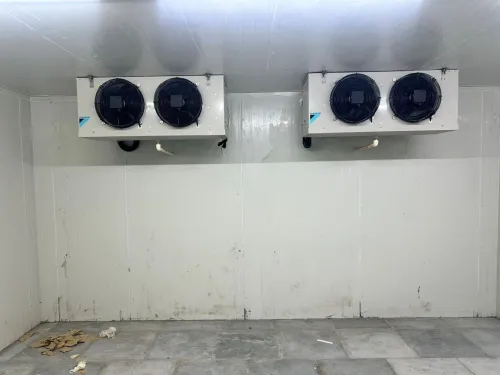
Select compressor capacity for the combined peak load at the design suction and condensing conditions, with a stated run-time allowance. Select evaporator capacity for the same refrigerant conditions, then check coil airflow and discharge pattern. An undersized coil prolongs recovery; excessive airflow can dry or freeze exposed products.
Size for product pull-down, not merely for holding temperature.
Specify the envelope, floor, airflow and door package
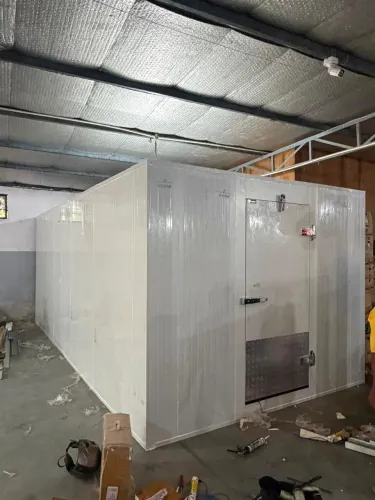
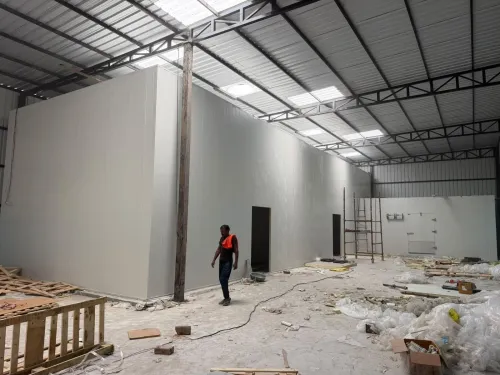
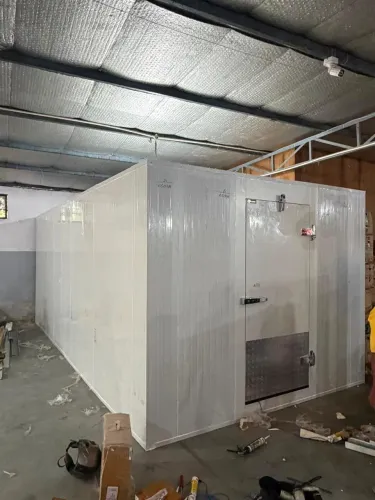
Prevent heat gain and contamination with a continuous insulated envelope, a load-rated floor, directed airflow and a sealed door set. Choose PUF panel thickness from the room temperature, panel span and heat-load calculation; do not size it from room volume alone. A PIR insulated cold room provides another high-performance panel option.
Detail each package against its failure mode:
| Package | Specify | Prevents |
|---|---|---|
| Envelope | Tongue-and-groove or cam-lock joints, sealed panel penetrations, and vapour barrier continuity on the warm side | Moisture entering insulation, condensation and thermal bridging |
| Floor | Insulation beneath a reinforced, non-absorbent finish; verify cold room floor loading for pallets, racks, forklifts and concentrated wheel loads | Slab cracking, settlement, wet insulation and damaged product |
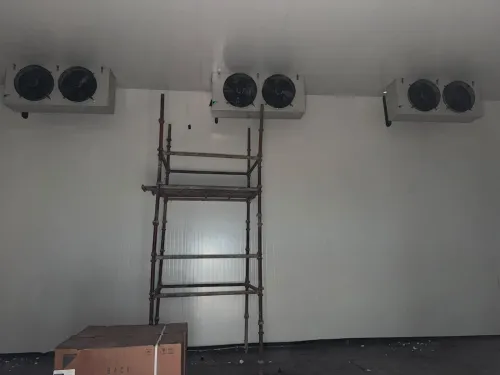
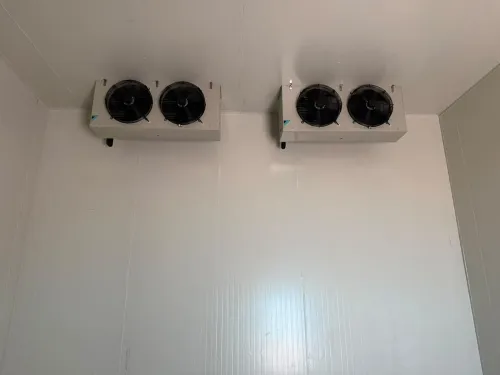
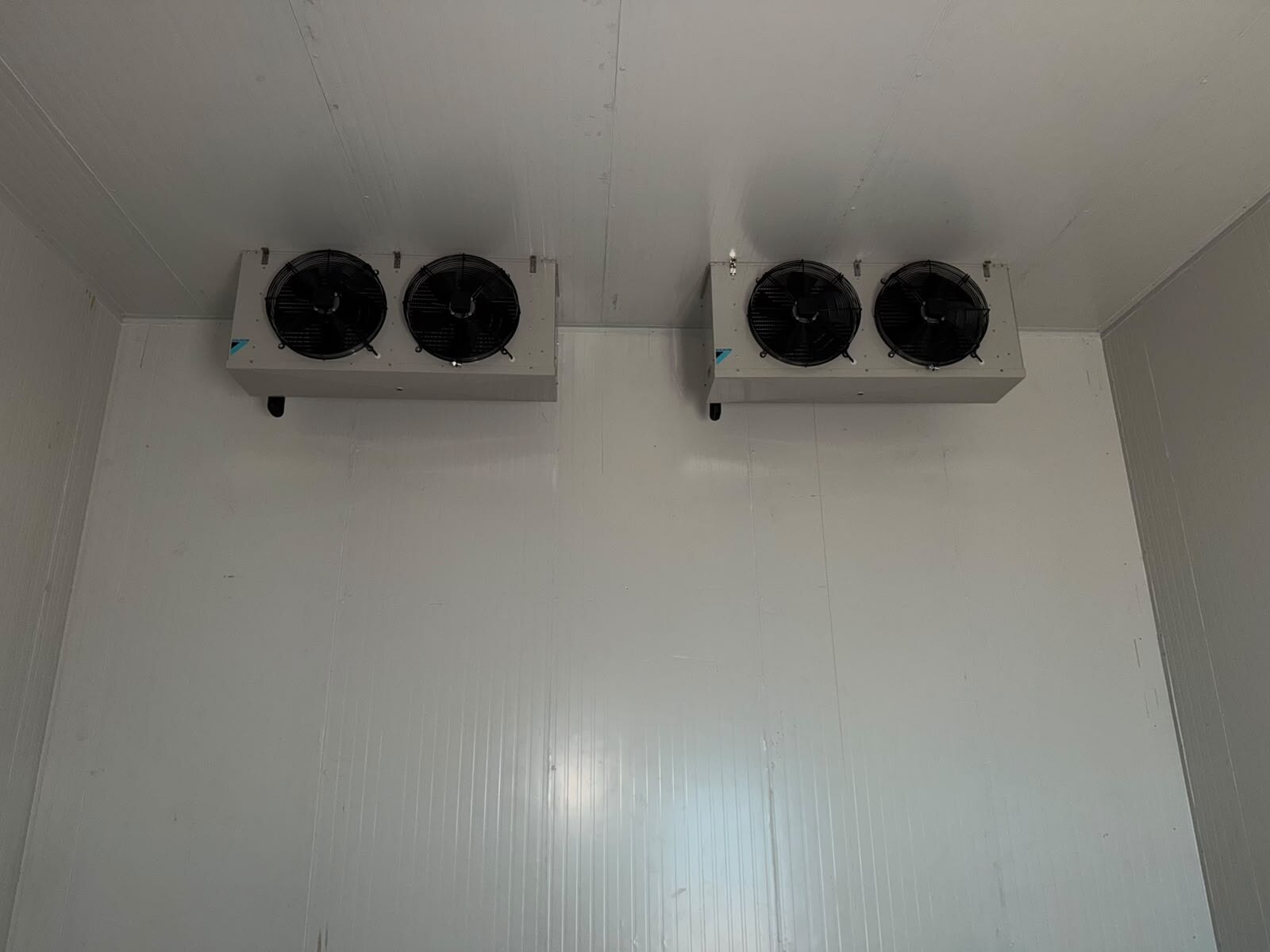
| Airflow | Position evaporators for even circulation; keep discharge air away from exposed produce, meat and cartons; provide hygienic condensate drainage | Freezing, dehydration, warm pockets, dripping condensate and cross-contamination |
| Door | Use an insulated, self-closing door with compression gaskets, a level threshold and protected seals; add strip curtains or an airlock at busy openings | Infiltration, frost, condensation and prolonged temperature excursions |
Keep internal surfaces smooth and washable, with coved floor-to-wall junctions and no inaccessible ledges. Separate rooms when products need incompatible humidity, odour control or sanitation regimes; a shared room can transfer moisture and contaminants even when its thermostat reads correctly.
For freezer doors, heat the frame and drain trapped condensate where frost would block closure. Provide impact protection around door leaves and evaporators so pallets cannot puncture insulation or obstruct airflow.
Validate the room with mapping, alarms and operating records
A room passes validation only when product temperatures stay within label limits during the events that create heat gain. Temperature mapping must cover empty and representative loaded states, normal loading, door openings, defrost, and the hottest and coldest seasonal conditions. Repeat it after changes to layout, refrigeration, airflow, or doors.
Write the protocol before testing. Define sensor locations, test duration, acceptance limits, alarm response, and required records.
- Place sensors at mapped warm and cold spots, not only beside the evaporator or thermostat.
- Record room-air and product core temperature monitoring for representative cartons, pallets, or vaccine loads during loading, door opening, defrost, and recovery.
- Challenge high- and low-temperature alarms, then verify notification, acknowledgement, escalation, and time-stamped corrective action.
- Test seasonal conditions that change heat gain or refrigeration performance.
For medicines, use the label condition: “refrigerate” is not the same as “protect from freezing,” and vaccines normally require 2–8°C. Frozen food needs stable product temperature at −18°C or below; a room setpoint alone proves neither condition. Retain raw mapping files, calibration evidence, alarm history, operating records, deviations, and corrective actions in one traceable file.
This evidence forms pharmaceutical cold room qualification and shows whether cold room design and installation protects inventory after handover. ICETECH ENGINEERS can use these records to correct sensor locations and operating settings during commissioning.
Related products
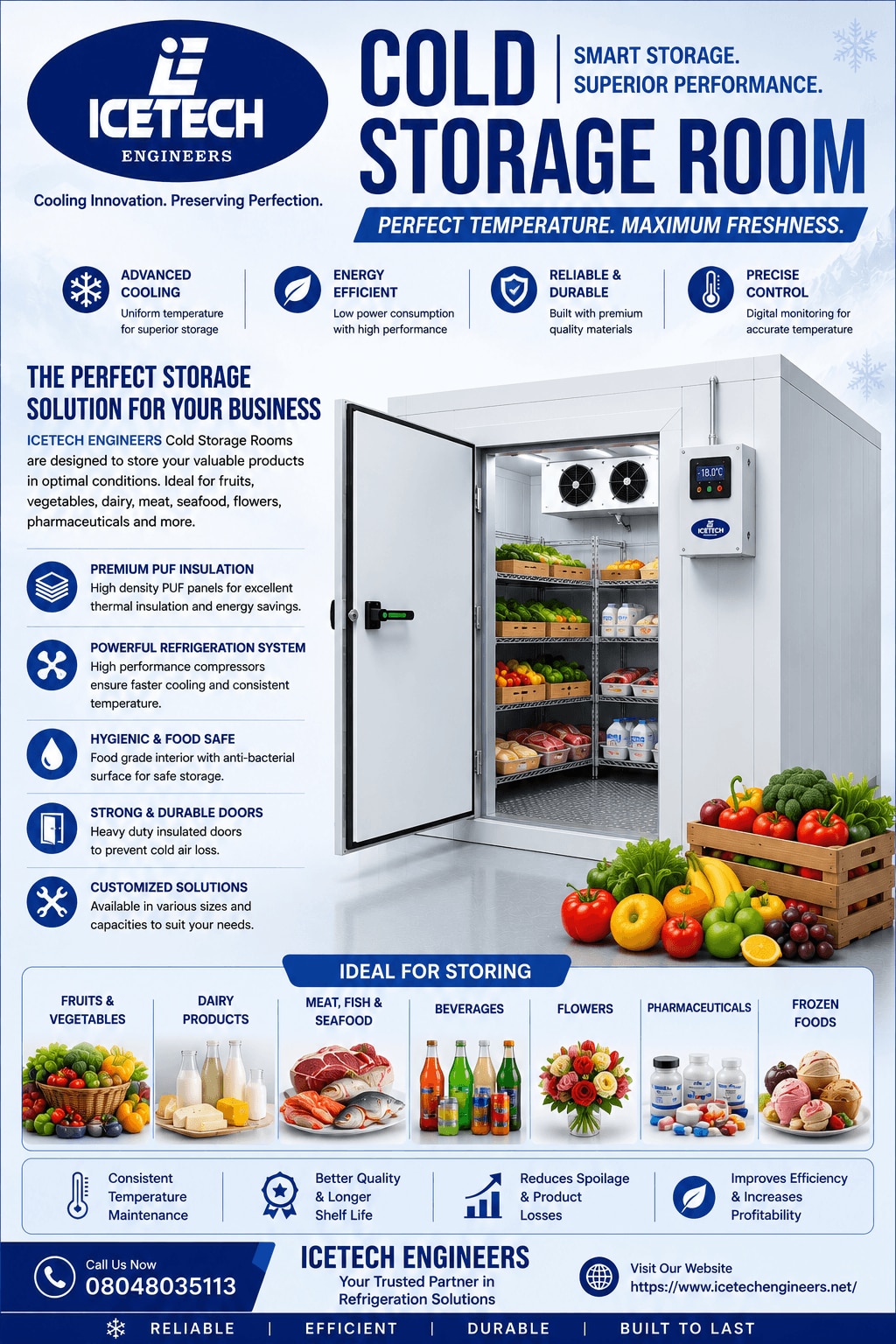 | Cold Storage Room ICETECH ENGINEERS is a leading manufacturer and supplier of high-performance Cold Storage Rooms designed for businesses that require reliable... View product → |
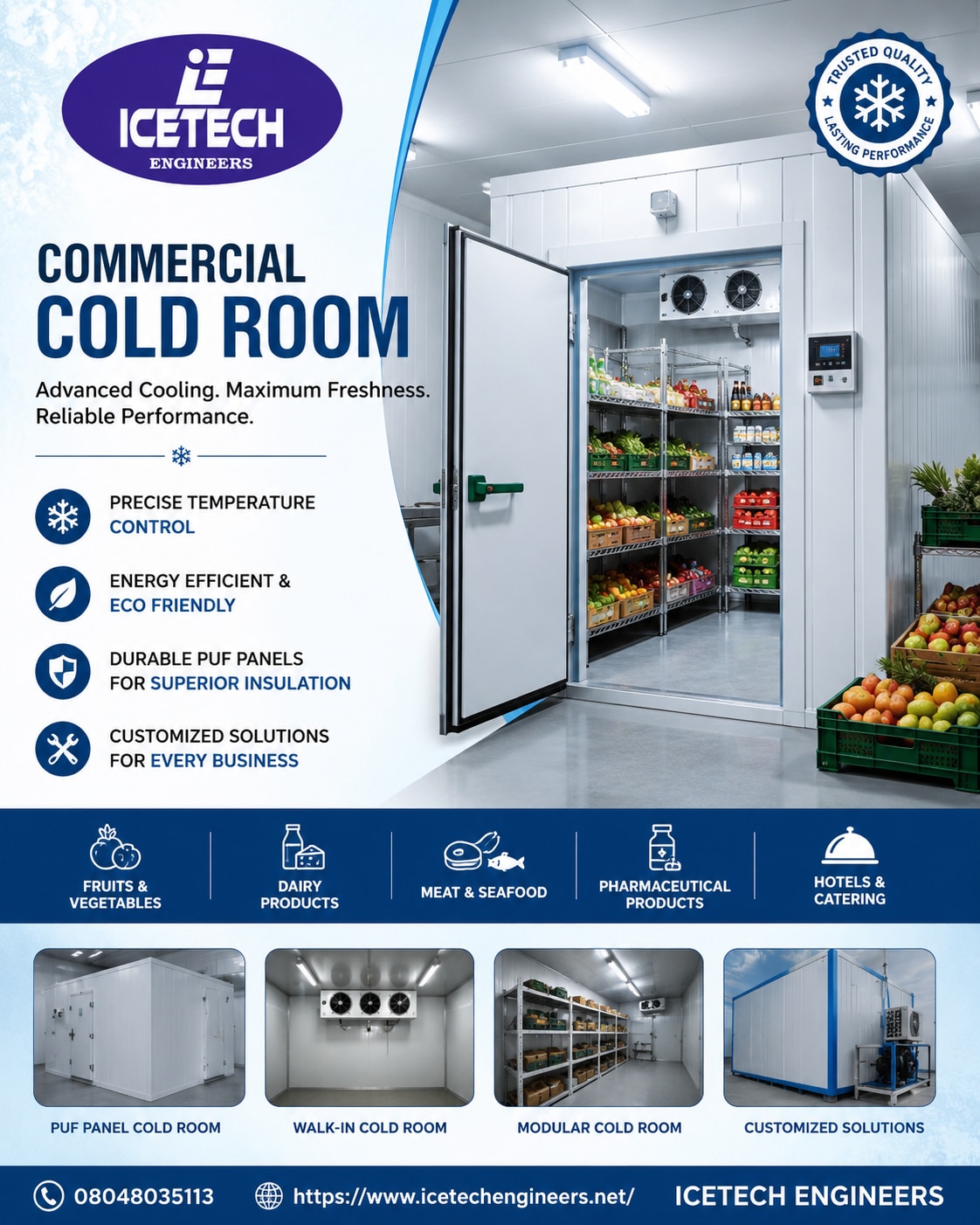 | Commercial Cold Room ICETECH ENGINEERS is a trusted name in designing and manufacturing high-performance Commercial Cold Rooms for businesses that require precise... View product → |
Frequently asked questions
What temperature should a refrigerated storage room maintain?
Set the room to the product’s validated temperature limit. The FDA Food Code requires refrigerated TCS food to remain at 5°C (41°F) or below, while many products need tighter quality targets.
Why choose the room type before the refrigeration equipment?
A chilled room, freezer, blast-cooling room and controlled-ripening room have different temperature, humidity, airflow and pull-down requirements. Those requirements determine the suitable refrigeration system.
What loads must be included when sizing refrigeration equipment?
Calculate product heat, daily throughput, incoming product temperature, room dimensions, people, lighting, fan motors, door openings, infiltration, defrost heat and the required pull-down time.
How do you validate a refrigerated storage room?
Map temperatures at product level across warm and cold locations, test alarms, compare room-air and product-core readings, and retain records for operating conditions, excursions and corrective actions.
Related products
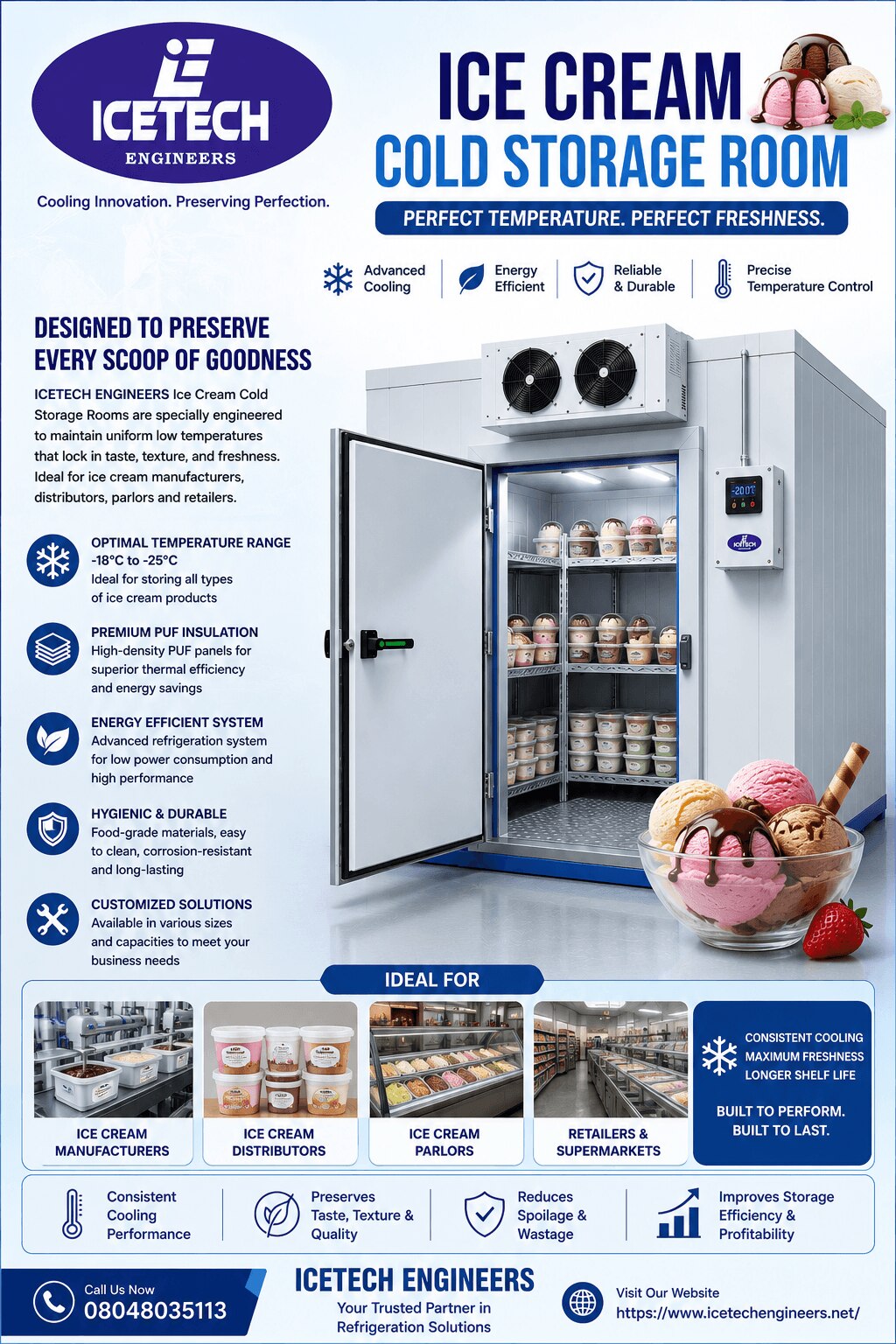 | Ice Cream Cold Storage Room ICETECH ENGINEERS is a trusted manufacturer and supplier of Ice Cream Cold Storage Rooms designed to maintain the ideal freezing temperature for... View product → |
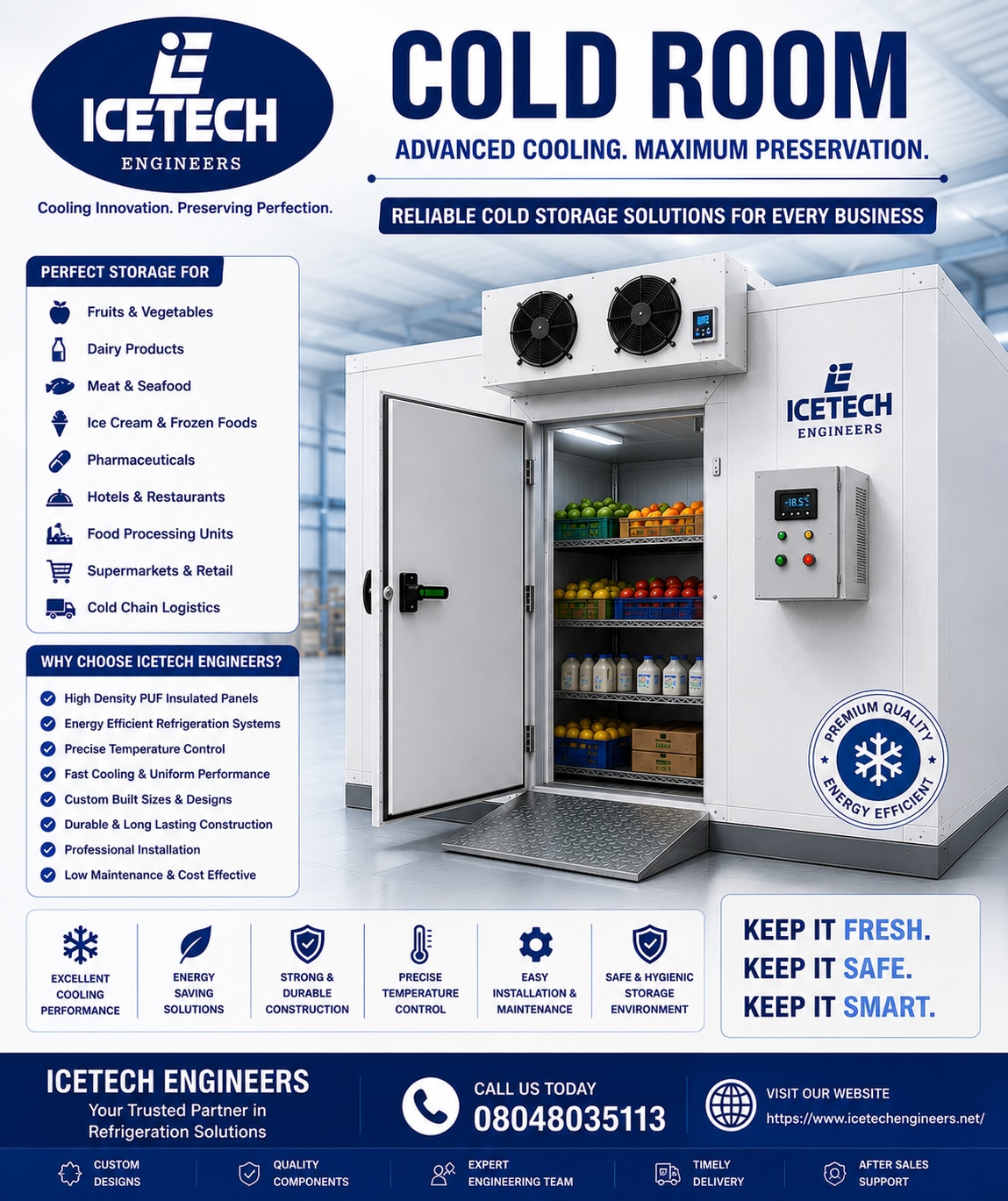 | Cold Room ICETECH ENGINEERS is a leading Cold Room Manufacturer, Supplier, and Installation Company in India, offering high-performance cold room solutions for... View product → |
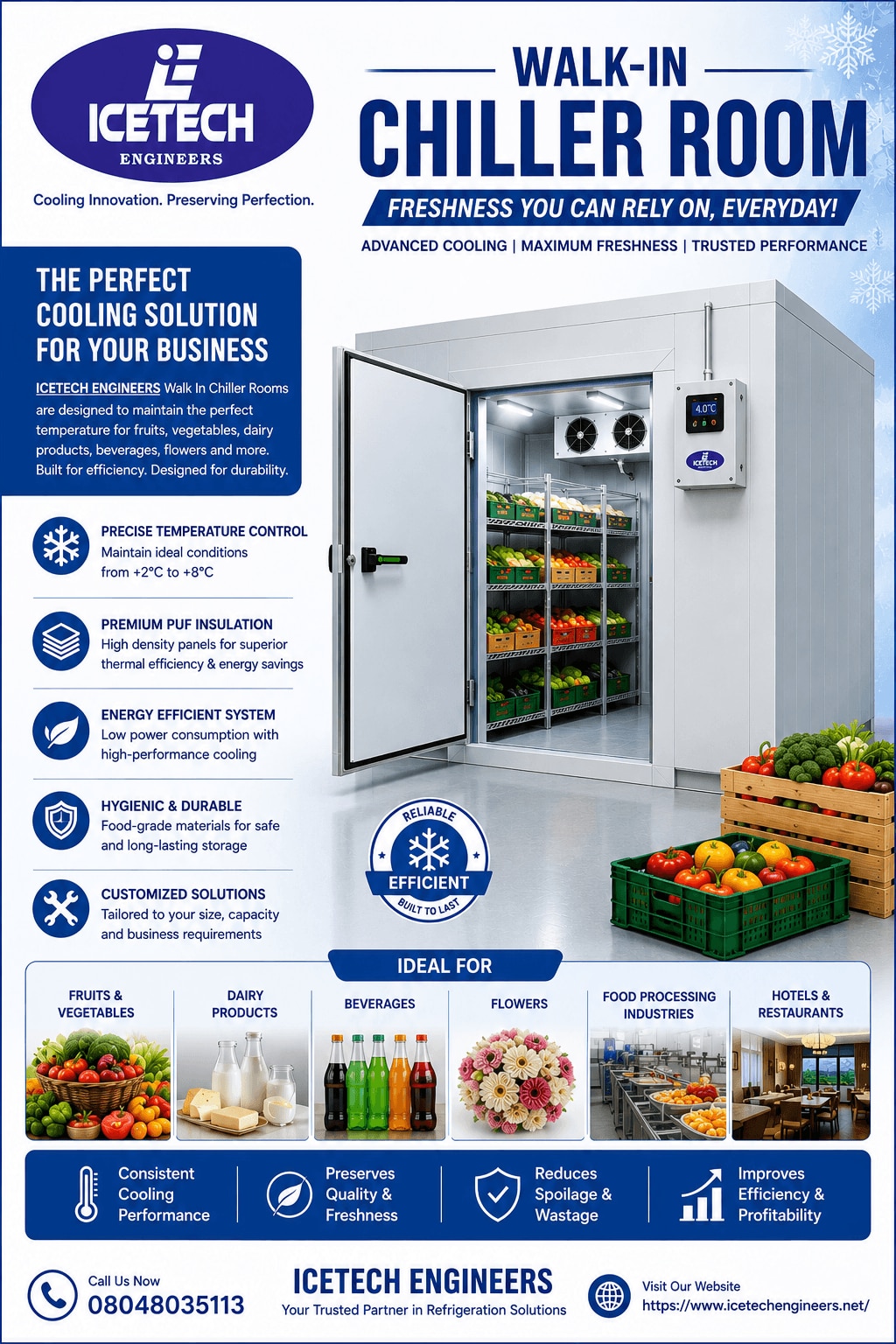 | Walk in Chiller Room ICETECH ENGINEERS is a trusted manufacturer and supplier of premium-quality Walk-In Chiller Rooms designed to maintain optimal temperatures for... View product → |