A cold room can display the correct air temperature while warm product, poor airflow, door traffic, or an unrecorded fault undermines safety. You will learn how to match storage conditions to each product, size and operate the room correctly, and respond when temperatures move outside the approved range.
Key takeaways
- Hold TCS food at 5°C (41°F) or below under the FDA Food Code.
- Use the product specification and validated process to set room conditions.
- Size capacity for stock volume, incoming heat, airflow, and door traffic.
- Record excursions with calibrated sensors and define corrective actions.
Set the right temperature for each product category
A food storage temperature guide starts with the product, not the room. Use the package specification, validated process, and local food rules before choosing a set point; for FDA Food Code operations, time/temperature-control-for-safety food is generally held at 5°C (41°F) or below.
| Product category | Working range | What an excursion can cause |
|---|---|---|
| Pharmaceuticals | 2–8°C; frozen products follow the label | Reduced potency, failed stability limits, or quarantine |
| Dairy refrigeration | 0–4°C | Faster microbial growth, souring, separation, and shorter shelf life |
| Meat | 0–4°C | Bacterial growth, purge, discoloration, and rejected stock |
| Seafood | 0–2°C, often packed on ice | Rapid spoilage, odor, texture loss, and safety risk |
| Leafy produce | 0–4°C | Wilting, browning, freezing injury, or decay |
| Tropical produce | 7–13°C | Chilling injury, poor ripening, pitting, and surface damage |
| Frozen food | −18°C or colder | Ice-crystal growth, freezer burn, texture damage, and quality loss |
| Ice cream | −18 to −25°C | Softening, refreezing crystals, and a gritty texture |
A produce cold room temperature below the crop’s tolerance can damage goods even when it prevents microbial growth. Excessively cold coils and fast air also dry uncovered produce, meat, and fish.
Use this checklist before accepting a range:
- Check the product label, batch specification, and jurisdictional limit.
- Measure product core temperature, not only room air.
- Verify probes and data loggers against a traceable reference; the FDA Food Code calls for food thermometers accurate to ±1°C (±2°F).
- Quarantine stock after a sustained excursion until its exposure time and product limit are assessed.
Turn the product specification into a usable room setting
A cold room set point must sit below the product’s maximum permitted temperature, not equal it. Build in the measured difference between room air and product core temperature, plus the controller’s normal swing, so a 5°C holding limit is not treated as a 5°C set point.
The final value must follow the product specification, jurisdiction, and validated process.
- Confirm the upper product limit and the loading temperature. Record whether goods arrive chilled, frozen, or warm from production.
- Map the room under full load. Measure air and product-core or simulated-product temperatures near the door, evaporator, centre, and warmest rack.
- Set the allowable temperature fluctuation from those results. Keep the entire product-temperature profile inside its limit, rather than judging compliance from the controller display.
- Specify the pull-down time: the maximum time for newly loaded goods to reach their required core temperature. Storage rooms are not automatically blast chillers.
- Specify recovery time after a defined door opening or loading event. Measure recovery at the warmest sensor, not only at the return-air probe.
- Verify probes and data-loggers against a traceable reference. For FDA Food Code operations, food-temperature devices require ±1°C accuracy; a displayed room value alone is not evidence.
Test the settings during the worst credible shift: maximum load, warmest approved loading temperature, normal door traffic, and a completed defrost. Defrost termination, fan delay, drip time, and maximum duration belong in the qualification because restarting fans too soon can spread warm air or meltwater.
Lowering the set point alone will not prevent drying; coil temperature, humidity, airflow, packaging, and residence time also matter.
Choose the room type and capacity from the operating load
Select the room by product state and heat load, not floor area. Chilled storage holds goods already near their target temperature; blast-chilling equipment removes heat from warm incoming product, while display equipment prioritises access and presentation rather than bulk capacity.
| Option | What it does | Choose it when |
|---|---|---|
| Chilled storage | Holds products above freezing | Dairy, produce, meat, seafood, and other chilled goods arrive pre-cooled |
| Frozen storage | Maintains frozen products | Stock enters frozen and only routine door-opening heat must be removed |
| Deep-freeze storage | Maintains lower temperatures for longer shelf life | Ice cream or products specified below ordinary frozen-storage conditions require dedicated equipment |
| Blast chilling | Pulls product temperature down rapidly | You receive warm or cooked goods and need a defined cooling time before storage |
| Controlled ripening room | Controls temperature, humidity, and sometimes ethylene | Fruit or other produce must reach a saleable maturity consistently |
| Display equipment | Refrigerates stock while customers or staff access it | Retail service requires visibility and frequent picking rather than dense pallet storage |
Size the room from the operating load. Record peak pallets or cartons, product dimensions, rack clearances, daily receipts, the warmest loading temperature, pull-down demand, door openings per hour, and the required recovery time. Add space for aisles, evaporator airflow, inspection, and safe handling; tight stacking creates warm zones and blocks return air.
Specify working capacity, not the advertised internal volume. Verify clearances and temperatures during loaded commissioning, then reserve capacity for seasonal peaks and planned growth. A small room overloaded every afternoon will perform worse than a larger room with fewer, shorter refrigeration cycles.
Control loading, airflow, humidity, and daily door traffic
Keep loads below the specified loading temperature, preserve cold room airflow clearance, control moisture entry, and shorten every door event. These practices prevent warm spots, condensation, frost, product drying, and repeated temperature recovery problems.
- Leave space between pallets, walls, ceilings, and evaporator air paths. Do not block return-air grilles or pack cartons tightly against the evaporator.
- Stage incoming goods outside the room, load in a planned sequence, and never prop a door open. Door opening management includes rapid operation, intact seals, strip curtains, and a vestibule or airlock where traffic is heavy.
- Use closed, moisture-resistant packaging for products vulnerable to drying. Excessive air velocity, a very cold coil, and long residence time can dehydrate uncovered produce, meat, and fish.
- Configure the defrost cycle with termination temperature, fan delay, drip time, and maximum duration. Restarting fans before meltwater has drained can blow warm air or droplets onto stock.
| Control | Practical check | Failure prevented |
|---|---|---|
| Loading | Measure product-core or simulated-product temperature after receipt and a full load | Cold air masks warm product |
| Airflow | Verify clear aisles and unobstructed supply and return paths | Remote warm spots |
| Humidity | Check door seals, floor moisture, frost, and exposed product surfaces | Condensation and drying |
| Doors | Record frequent openings and close doors immediately after each movement | Long recovery periods |
| Defrost | Review coil frost, termination, drip time, and post-defrost temperatures | Ice buildup and heat shock |
Place control sensors where they represent the room’s warmest operational risk, not directly in evaporator discharge air. Trend product or simulated-product probes during qualification and after prolonged openings; air temperature returning to setpoint does not prove the product has recovered.
Monitor excursions and specify a room that can be verified
A room display is not proof that the product stayed safe. Measure air with a calibrated temperature probe and place a temperature data logger at product level; verify both against a traceable reference, with food devices meeting the FDA Food Code accuracy of ±1°C (±2°F). Record sensor identity, calibration status, location, time, and readings.
Use an alarm that separates a brief door-opening rise from a sustained refrigeration failure. Every alarm record should show acknowledgement, escalation, and corrective action. Your temperature excursion procedure should require you to:
- Quarantine affected stock and label it with the time and observed temperature.
- Check product-core temperature or a validated simulated product; air can return to setpoint while the product remains warm.
- Review logger records, door activity, power status, defrost cycle, and equipment alarms.
- Release stock only against documented product time-temperature limits; otherwise obtain quality approval, rework it, or discard it.
- Record the cause, decision, person responsible, and preventive repair.
Specify verification before accepting the room. Loaded cold room temperature mapping should include warm spots near doors, corners, walls, ceilings, evaporator discharge, and return-air paths. Check pallet clearances, defrost termination, fan delay, drip time, and maximum defrost duration under load; defrost is a controlled excursion, not harmless maintenance.
When commissioning or upgrading a room, ask ICETECH ENGINEERS to provide mapped sensor locations, alarm logic, calibration records, and failure-recovery test results rather than relying on the controller’s displayed temperature.
Related products
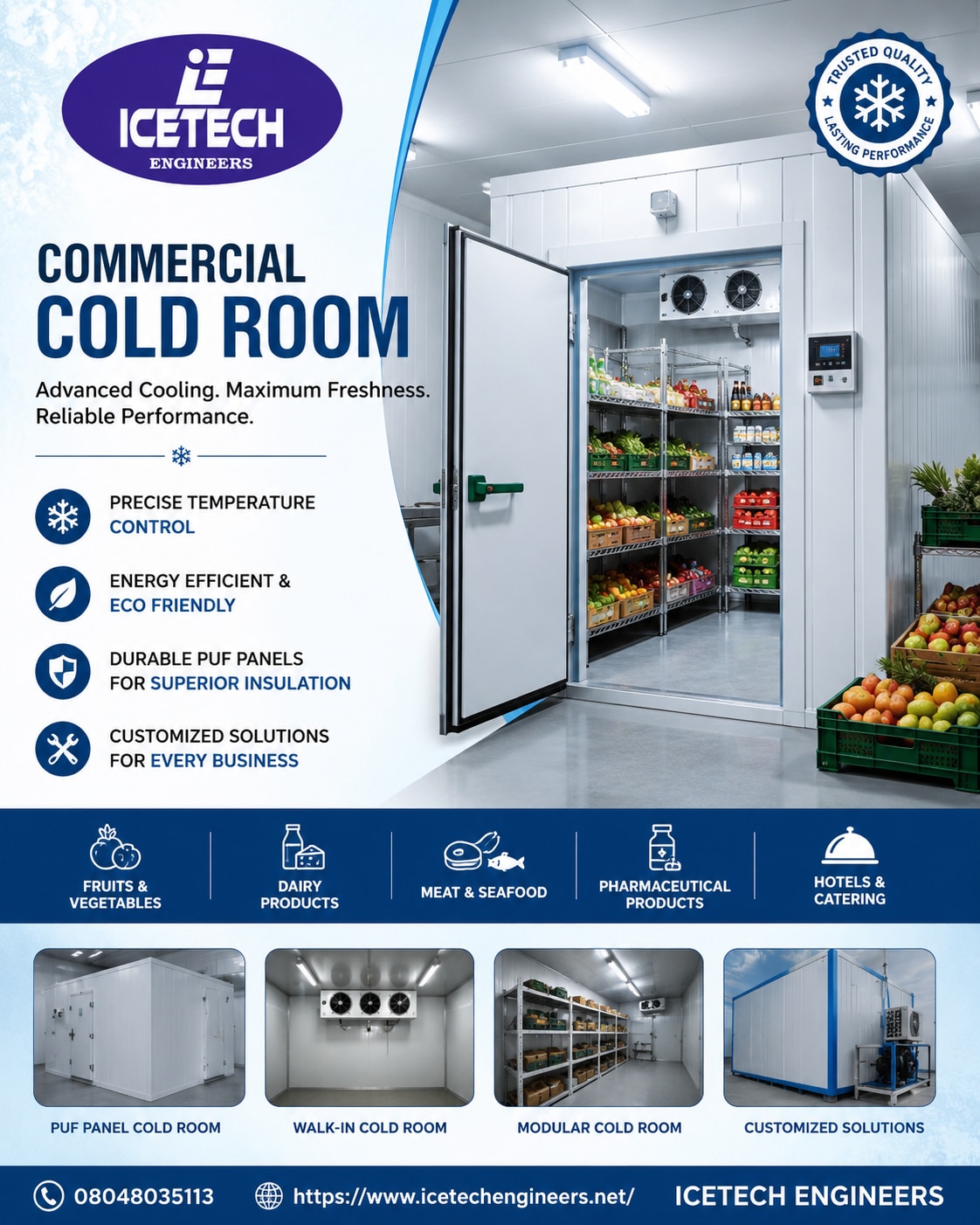 | Commercial Cold Room ICETECH ENGINEERS is a trusted name in designing and manufacturing high-performance Commercial Cold Rooms for businesses that require precise... View product → |
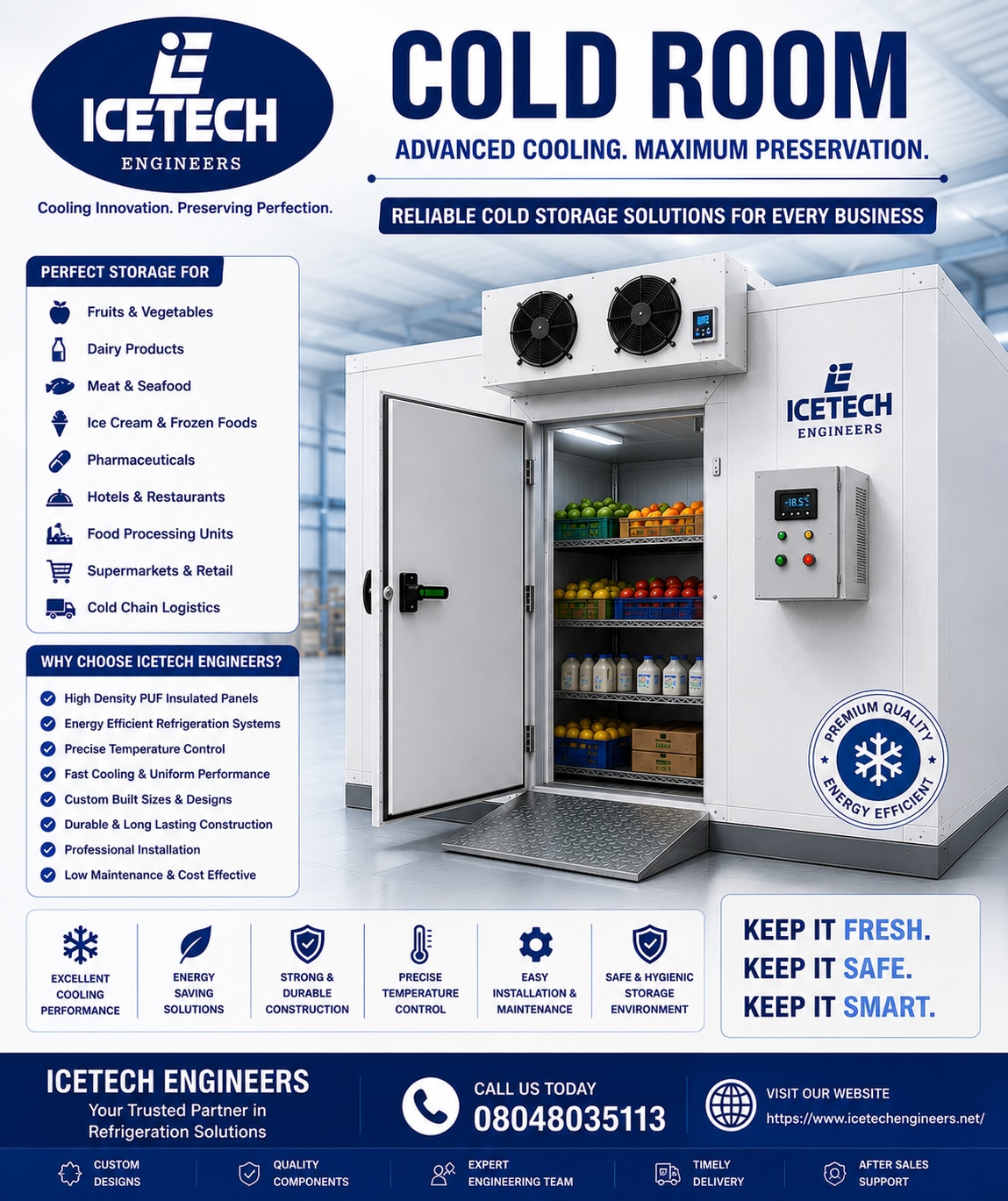 | Cold Room ICETECH ENGINEERS is a leading Cold Room Manufacturer, Supplier, and Installation Company in India, offering high-performance cold room solutions for... View product → |
Frequently asked questions
What temperature should a cold room use for food storage?
Start with the product specification, validated process, and local food rules. For FDA Food Code operations, hold time/temperature-control-for-safety food at 5°C (41°F) or below.
How do you turn a product specification into a cold-room setting?
Translate the required product temperature, allowable tolerance, humidity, air speed, pull-down time, and defrost limits into room controls. Confirm that the setting keeps the product, not just the room air, within specification.
How do you choose cold-room capacity?
Calculate usable pallet or shelf capacity from the stock volume, then account for clearance, airflow, incoming product heat, refrigeration pull-down, lighting, staff, and daily door openings.
How can you control cold-room temperature excursions?
Use calibrated sensors at representative warm and cold points, record readings continuously, set alarm limits, and document the response for each excursion.
Related products
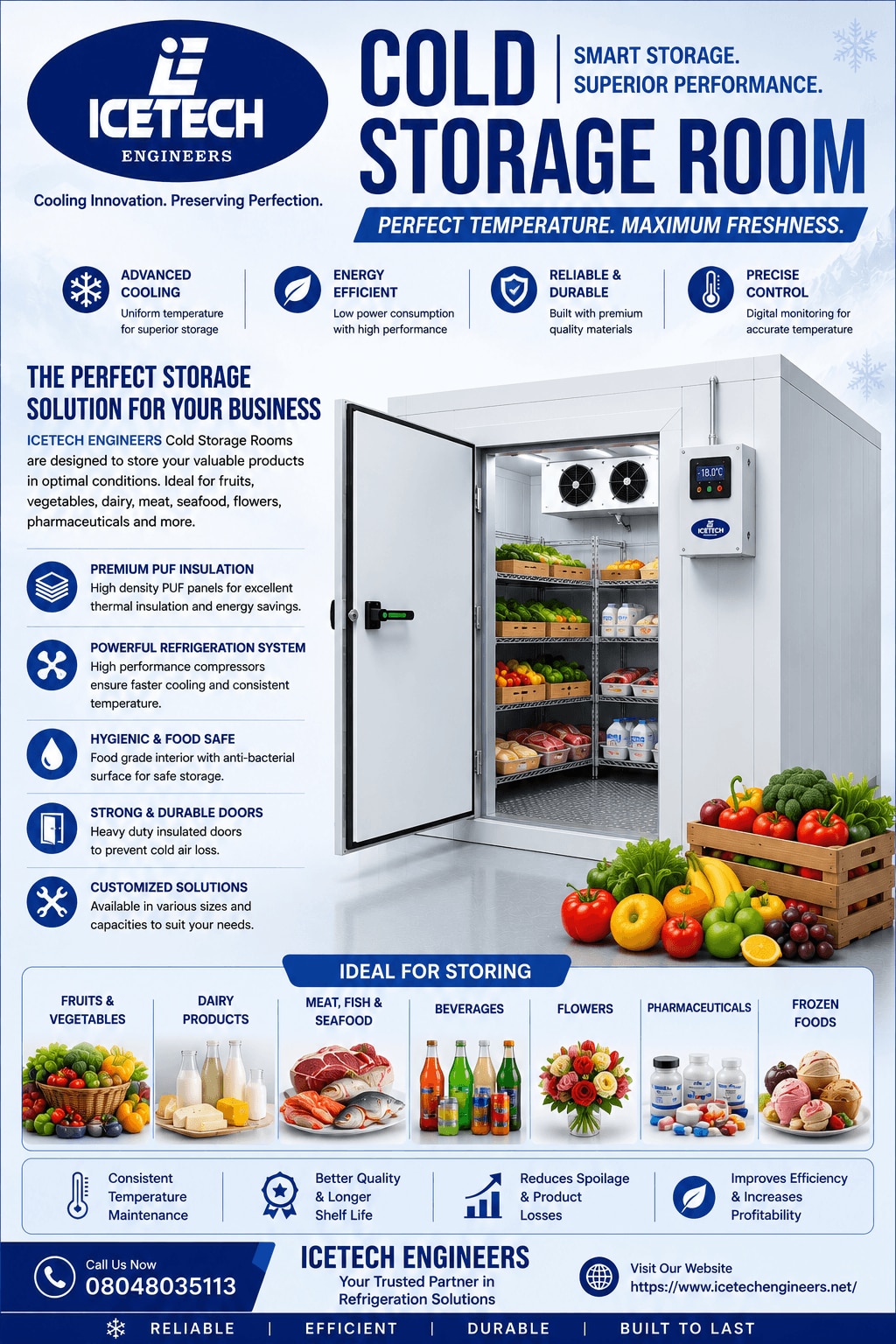 | Cold Storage Room ICETECH ENGINEERS is a leading manufacturer and supplier of high-performance Cold Storage Rooms designed for businesses that require reliable... View product → |
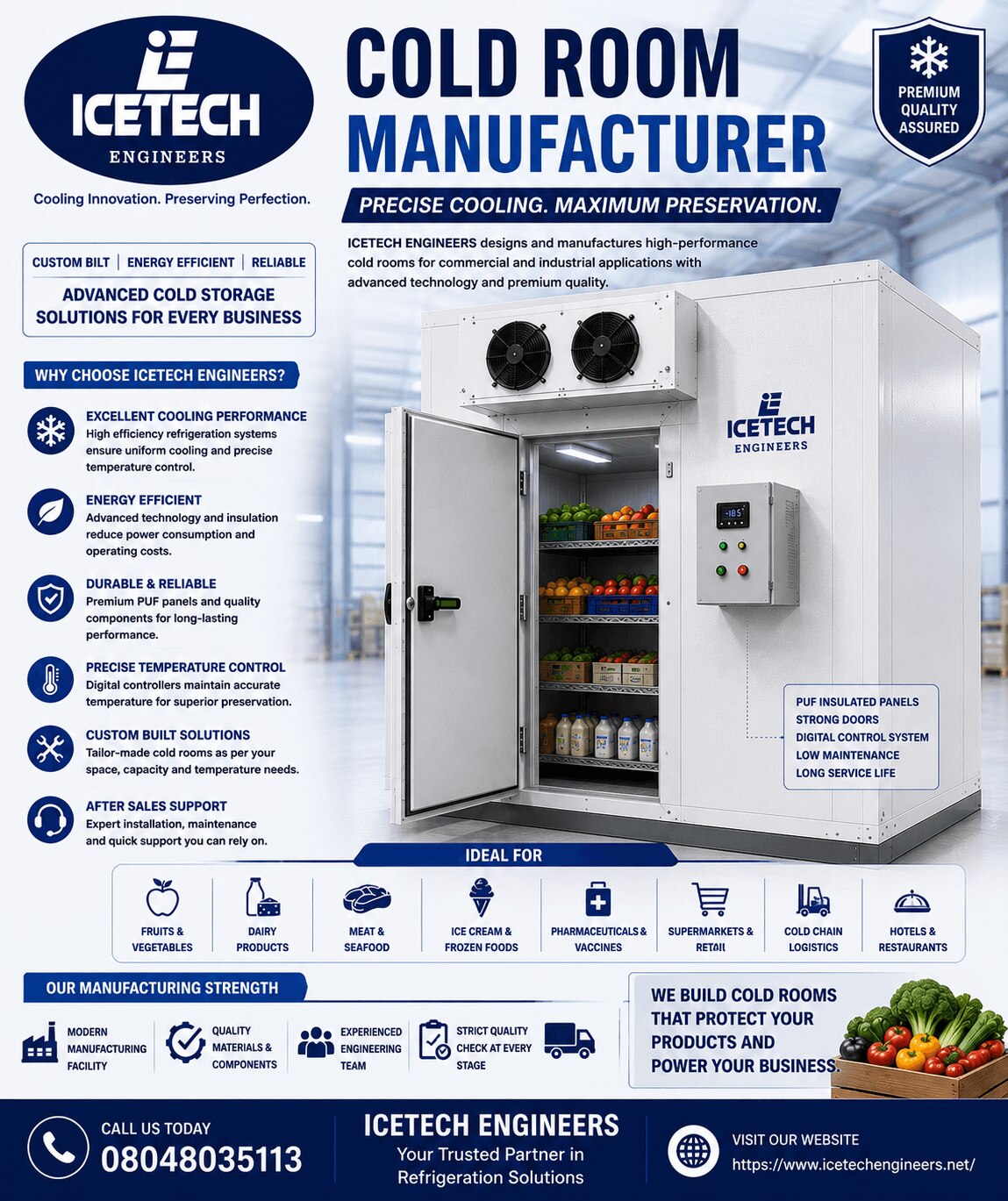 | Cold Room Manufacturer ICETECH ENGINEERS is a leading Cold Room Manufacturer in India, specializing in the design, manufacturing, supply, and installation of... View product → |
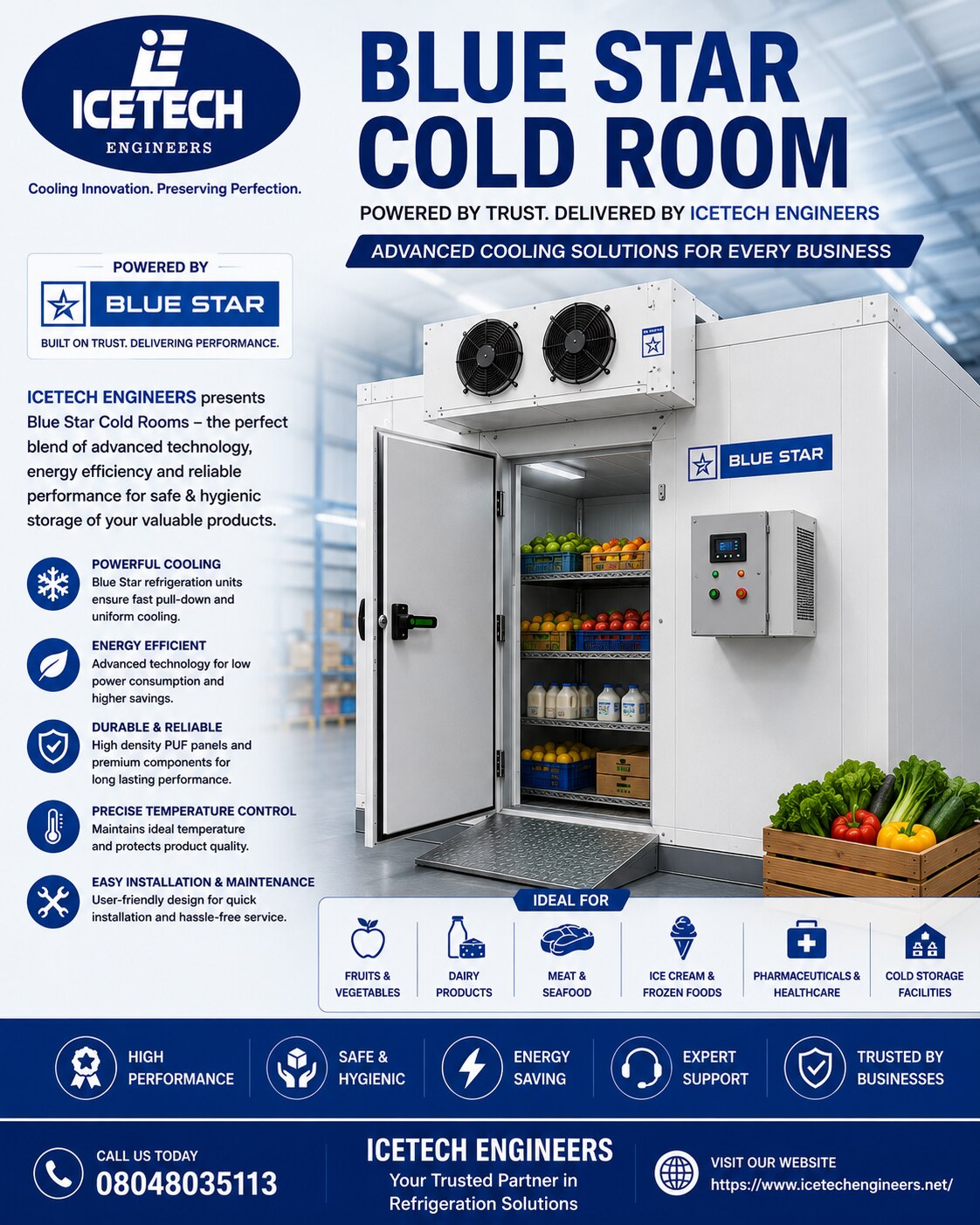 | Blue Star Cold Room ICETECH ENGINEERS offers high-quality Blue Star Cold Room solutions for commercial and industrial refrigeration applications. View product → |
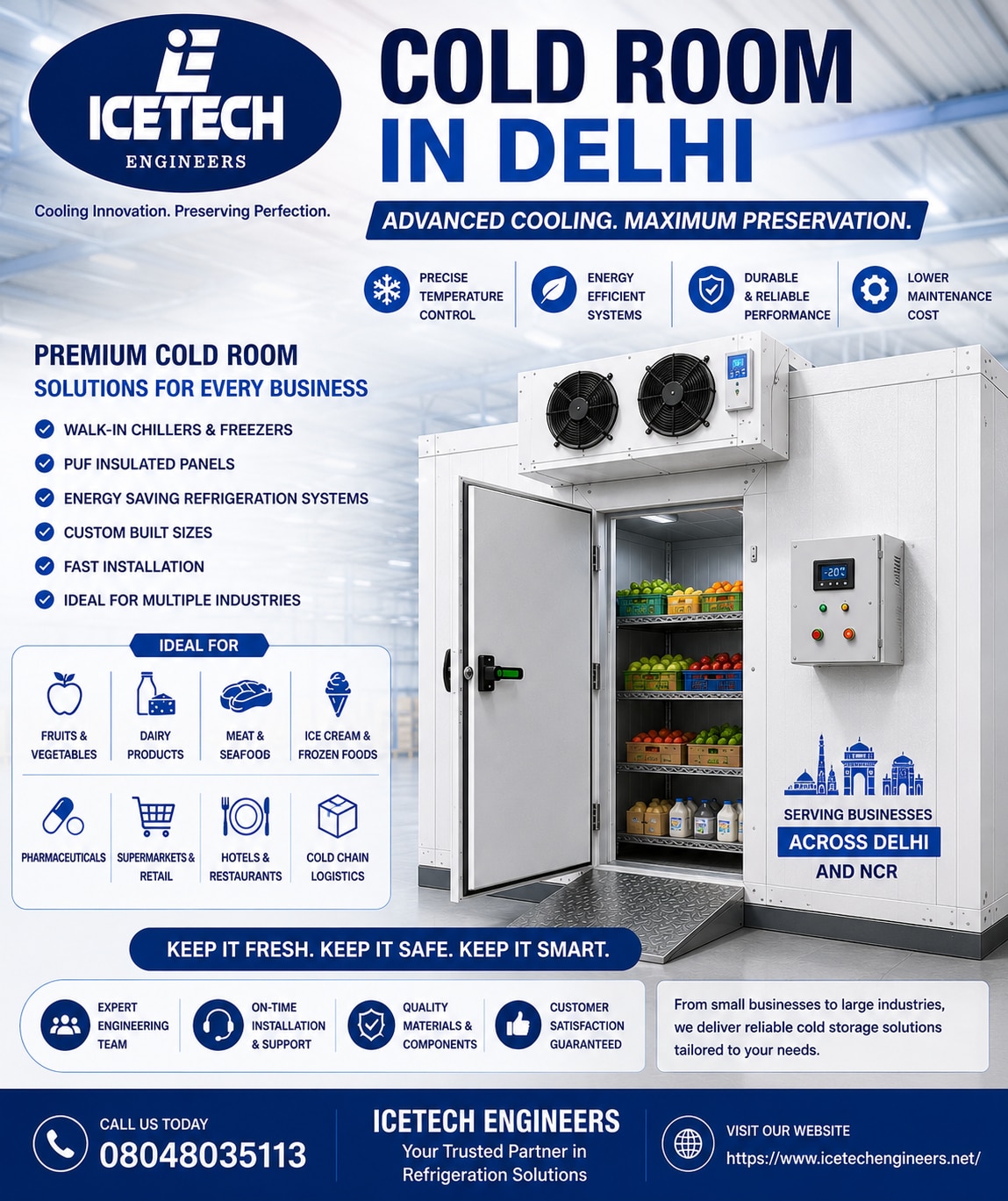 | Cold Room in Delhi ICETECH ENGINEERS is a trusted Cold Room Manufacturer in Delhi, offering advanced temperature-controlled storage solutions for commercial and... View product → |