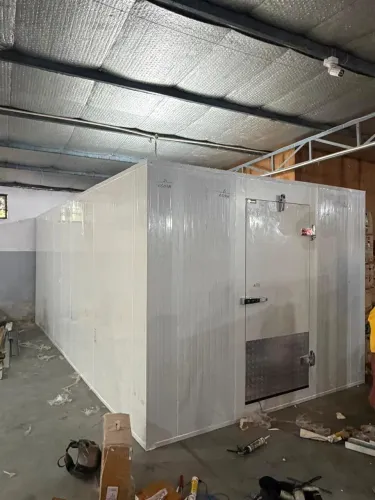
Fresh and frozen meat products require carefully managed storage conditions throughout processing and distribution. A Meat Cold Storage Room is therefore more than an enclosed refrigerated space. Its design needs to account for temperature, hygiene, product movement, storage density, and daily loading activity.
For meat processors, distributors, commercial kitchens, and food businesses in Noida, planning these requirements before equipment selection can prevent many operational problems later.
Start With the Product Requirement
Different meat products can have different storage requirements depending on whether they are chilled, frozen, freshly processed, packaged, awaiting dispatch, and intended for longer storage.
Before designing a facility, businesses should define:
- Product categories being stored
- Required storage temperature
- Incoming product temperature
- Daily product quantity
- Maximum storage volume
- Average storage duration
- Packaging format
- Loading frequency
These details help determine both refrigeration capacity and room configuration.
Separate Operational Activities Clearly
Storage efficiency improves when receiving, processing, cold storage, and dispatch activities follow a logical flow.
Poor movement planning can result in doors remaining open longer than necessary. It can also make stock handling difficult and increase congestion during busy periods.
Rack locations, pallet movement, aisle dimensions, door placement, and loading access should therefore be considered during the design stage.
Hygiene-Friendly Construction Is Important
Meat processing environments require regular cleaning. Interior surfaces should therefore support practical hygiene procedures.
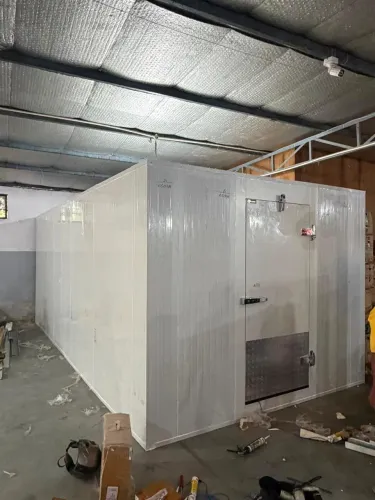
Cold room panels, flooring, joints, doors, and internal fittings should be selected with maintenance and cleaning requirements in mind. Damaged surfaces and difficult-to-clean areas can complicate routine sanitation.
Drainage requirements also need attention where the operational process involves washing.
Refrigeration Load Depends on More Than Room Size
Two meat storage rooms with the same dimensions can require different refrigeration capacities.
A facility receiving warm product frequently can impose a higher refrigeration load than a room containing products already close to the required storage temperature.
Engineers generally consider factors such as:
- Product load
- Ambient temperature
- Insulation
- Door opening
- Lighting
- Personnel
- Equipment operating inside the room
- Required pull-down time
A detailed assessment helps select refrigeration equipment suited to the actual operating pattern.
Airflow Should Reach Stored Products
Packing products too tightly can interfere with cold-air circulation. Storage layouts should maintain suitable clearance around refrigeration equipment and provide enough space for air movement.
Organized shelving and racking can also make first-in-first-out inventory practices easier to manage.
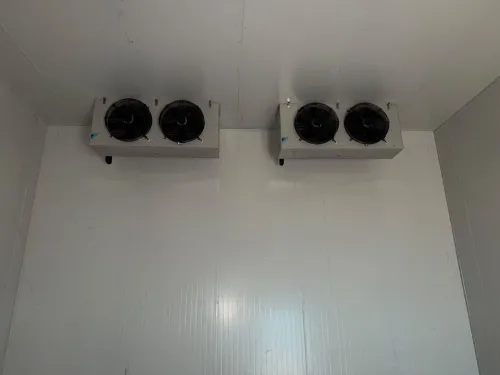
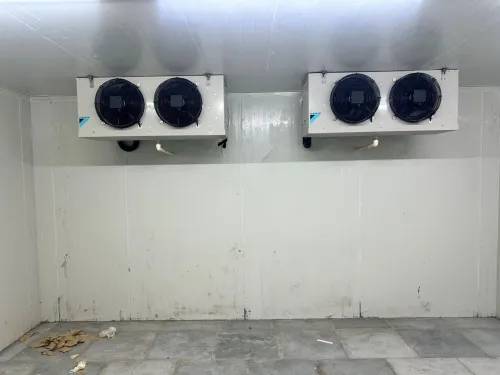
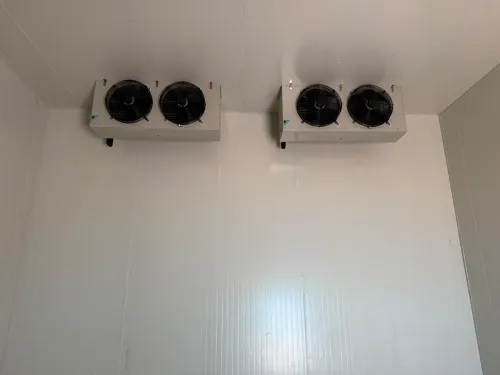
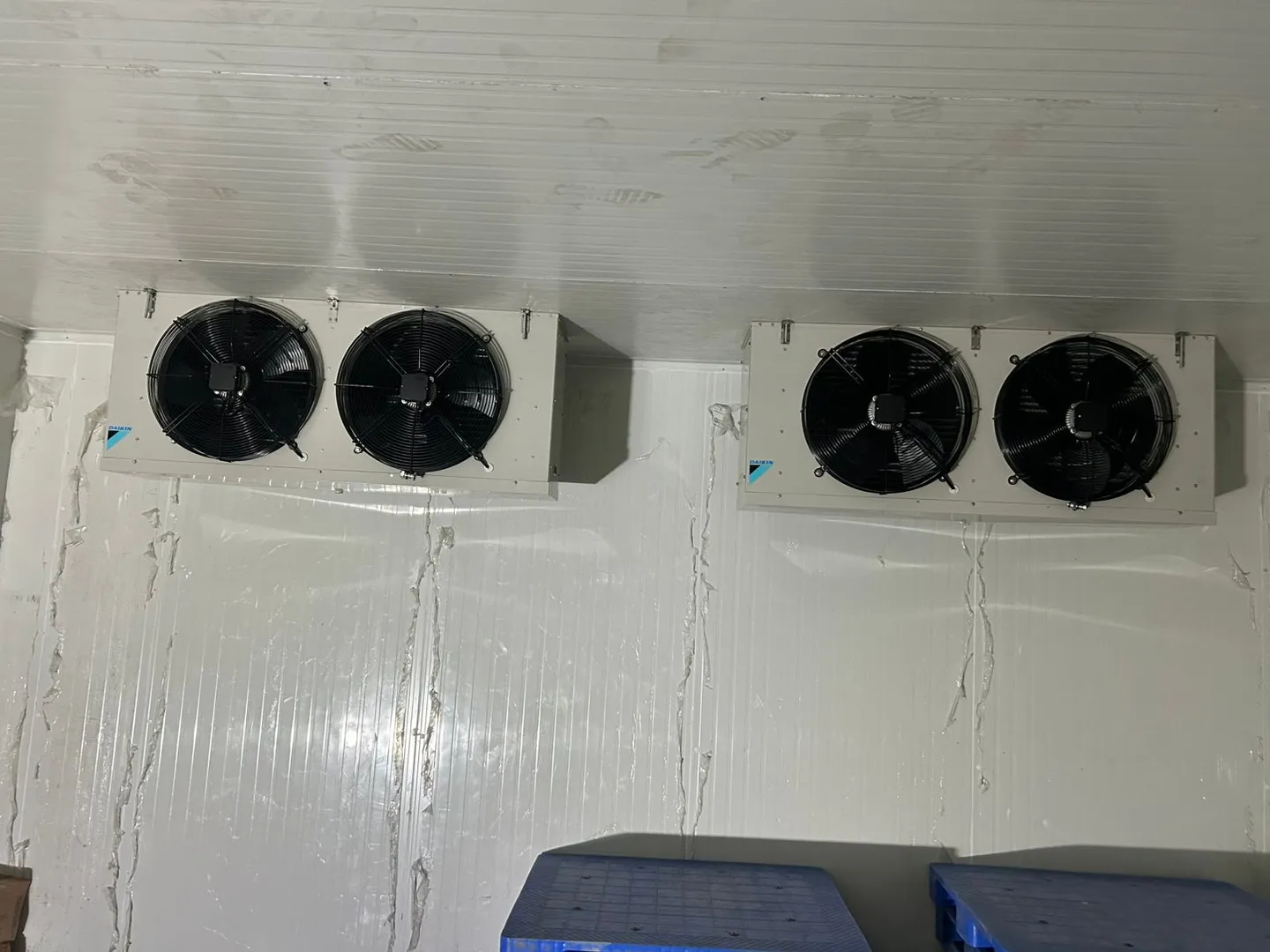
Operators should avoid blocking evaporator airflow with cartons, pallets, hanging products, and temporary stock.
Temperature Monitoring Supports Process Control
Routine temperature monitoring helps staff identify unexpected changes before they become prolonged.
A commercial facility may require controllers, digital displays, alarms, data logging, and other monitoring features based on its operating requirements.
Records can also support internal quality procedures and provide useful information when troubleshooting refrigeration performance.
Consider Maintenance Access During Design
Compressors, condensers, evaporators, electrical controls, valves, and other components require periodic inspection. Equipment should be positioned so technicians can reach important components without unnecessarily disrupting normal operations.
Ignoring maintenance access during installation can make routine servicing more complicated later.
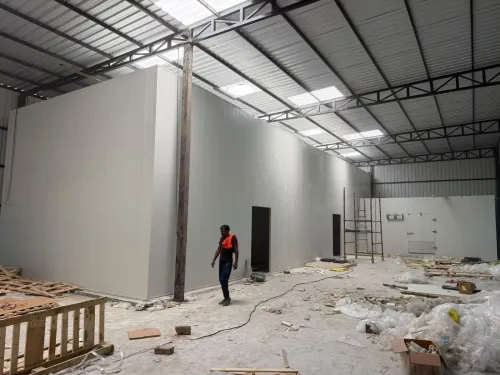
Building a Practical Facility in Noida
Industrial and food-processing businesses in Noida need cold storage systems that match their production flow rather than relying on generic room configurations.
ICETECH ENGINEERS can assess site conditions, expected meat volumes, storage requirements, insulation needs, refrigeration loads, and operational movement when developing temperature-controlled facilities.
A correctly planned Meat Cold Storage Room supports much more than cooling. It contributes to organized product movement, hygiene management, temperature stability, efficient storage, and predictable daily operations. Defining these requirements before installation gives businesses a stronger foundation for reliable cold-chain management.
Keywords